
Share this
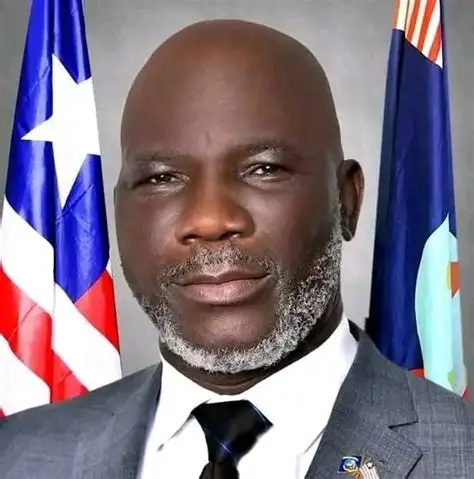
The political atmosphere at Liberia’s House of Representatives has grown increasingly tense as allegations against Speaker Richard Nagbe Koon continue to unfold, transforming a personal dispute into a far-reaching governance crisis with international legal implications.
The controversy centers on claims made by Mrs. Cecelia Katherine Kpor, a retired United States Army officer, who publicly stated that she is legally married to Speaker Koon and that no divorce has ever occurred. According to Kpor, the marriage took place while she was serving in the U.S. military and remained valid for years, directly contradicting the Speaker’s public narrative.
Her disclosures, first made on Spoon Radio and later amplified online, sparked national debate and placed the Speaker’s personal conduct under unprecedented scrutiny.
In response, Speaker Koon and his family issued a firm denial. In a striking counterclaim, they asserted that Kpor is not his wife but his biological sister on his father’s side. The Speaker, writing on Facebook, urged Kpor to pursue her claims through the courts rather than public platforms, describing the media disclosures as damaging and malicious.
Koon maintained that his leadership is founded on integrity and respect for the rule of law, calling for calm and lawful resolution of the dispute.
The situation grew more complex following statements from the Speaker’s spokesperson, Vehzelee Sumo, who alleged that Kpor attempted to manipulate U.S. immigration processes. Sumo claimed that Koon traveled to the United States under an academic exchange program and that Kpor later proposed an arrangement in which she would file immigration paperwork in exchange for money and property.
According to the spokesperson, Kpor prepared marriage documents without Koon’s consent and forged his signature allegations she has flatly denied. Kpor insists the marriage was legitimate and says she has already filed for divorce in Liberia, accusing the Speaker of failing to respond to the case.
Rather than settling the matter, these competing accounts intensified public suspicion and political debate.
The controversy took a more serious turn with the emergence of official documents from U.S. Citizenship and Immigration Services. A decision issued on December 1, 2022, by USCIS’s Lawrence Field Office in Massachusetts references a Form I-130 Petition for Alien Relative filed on behalf of Richard Nagbe Koon by a U.S. citizen seeking to classify him as a spouse under U.S. immigration law.
The existence of the filing has raised new questions about the accuracy of public denials and the credibility of those involved, adding an international dimension to a dispute already shaking Liberia’s political establishment.
As calls for transparency grow louder, the unfolding saga has become more than a personal controversy. For many Liberians, it now represents a critical test of accountability, ethical leadership, and the standards expected of those entrusted with the nation’s highest legislative authority.

A Liberian by birth studying Sociology with an emphasis on mass communication also a top notch entertainment promoter
